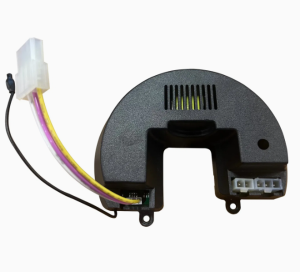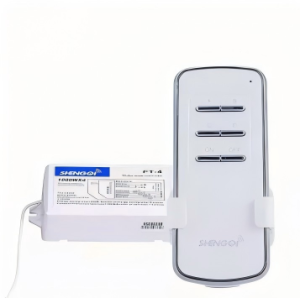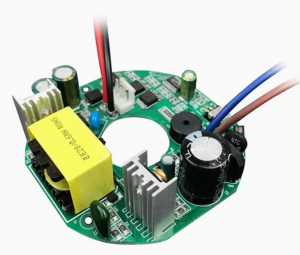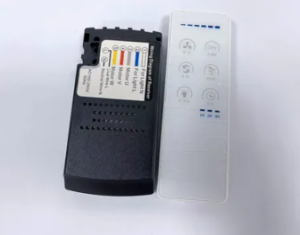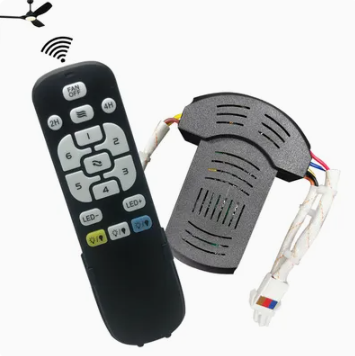
Dimmable Ceiling Fan Light Remote Controller
Dimmable Ceiling Fan Light Remote Controller. Confirm the matching control board, command functions and installation interface.
Built for your product platform.
Dimmable Ceiling Fan Light Remote Controller: recorded scope
Dimmable Ceiling Fan Light Remote Controller. Confirm the matching control board, command functions and installation interface. This page records what the listing currently states and separates it from what still has to be confirmed for your project. It is a working reference for an enquiry, not a released specification: the approved drawing revision, motor data and test plan take precedence over anything shown here.
What this listing records
| Listing title | Dimmable Ceiling Fan Light Remote Controller |
|---|---|
| Product category | Fan Remotes & Controls |
| Internal reference | SK-152 |
| Signals named in title | dimming |
| Configuration status | Not yet confirmed for a specific project |
Figures taken from a listing title are descriptive. They indicate the intended application; they do not establish the rated conditions of the unit supplied for your programme. Confirm them against the approved project configuration before quoting, sampling or designing around them.
Handset and receiver as one system
A handset is only half of a control system. The receiver, or the control board it commands, determines which functions can actually be invoked. Treating the two as separate purchases is a frequent source of mismatch, especially where a replacement handset is being sourced for an existing installation.
- The exact receiver or board model the handset must command
- Function list on the existing product, including any that are unused
- Button layout, legend and enclosure finish
- Replacement or retrofit scenario, if this is not a new build
What to confirm before sampling
These are the inputs the engineering team needs in order to turn this listing into a reviewable specification for fan remotes & controls.
- The receiver or control board this handset must pair with
- Command set, speed steps, timer and light functions in scope
- Radio band, pairing method and operating range in the installed product
- Battery type, button legend and enclosure finish required
Why this page does not quote full specifications
Publishing a numeric table that has not been traced to an approved drawing is worse than publishing none: a buyer can design a housing, a harness or a certification plan around a figure that was never verified. The parameters that decide whether this part fits your product – rated current under your load, thermal margin in your enclosure, connector pinout on your board revision, and the compliance scope for your market – are only meaningful once they are tied to a specific configuration.
What that means in practice is that the review is driven by your inputs rather than by a published table. Send the motor or load data, the available drawings and the target market, and the engineering team can respond with the specific values that apply to your build, together with the measurement conditions behind them. Where a figure cannot be supported for your configuration, the honest answer is to say so and propose the test that would establish it.
Application notes for this listing
Dimming behaviour
Dimming is judged at the bottom of the range as much as at the top. Flicker, drop-out and step consistency at low levels are where dimming products are most often found wanting, and they depend on the lamp electronics as much as on the control.
- Dimming curve and the number of steps
- Behaviour at the minimum level for the intended lamp
- Flicker performance across the range
Fan and light on one control
A combined fan and light control carries two loads with different characteristics. Light-control priority, the behaviour of one function while the other changes and the leakage limit with the light off are all part of the acceptance criteria.
- Priority between fan and light commands
- Leakage limit with the light switched off
- Smoothness of dimming at low levels, if dimming is in scope
Ceiling fan installation
A ceiling fan controller operates in a canopy above the blade set, which constrains both the space available and the radio environment for any remote function. Receiver placement and antenna orientation have to be evaluated with the canopy fitted.
- Space available inside the canopy
- Receiver placement and antenna keep-out
- Behaviour on a momentary power interruption
Handset and receiver as a pair
The handset is only half of the control system. The receiver or board it commands determines which functions can actually be invoked, so the pair has to be specified together rather than sourced separately.
- The receiver or board the handset must command
- Complete function list, including infrequent functions
- Button layout and legend before tooling
A handset is only half of a control system
Remotes are frequently sourced as a replacement part for an existing installation, or as an accessory for a board that is already fixed. In both cases the receiver defines what the handset can actually command. Button layout and legend are easy to compare; the command encoding, the pairing method and the light-function behaviour are where mismatches appear.
- Identify the receiver or board the handset must command
- Confirm whether re-pairing is possible in the field after replacement
- Agree the button legend and enclosure finish before tooling
- Test range with the receiver mounted in its final position
Where this type of part usually goes wrong
The usual mismatch is a replacement handset that does not command every function of the existing receiver. The functions that go missing are typically the least-used ones – a timer, a dimming step or a reverse function – so the problem surfaces after installation.
Validate every function the receiver supports
Enumerate the functions of the receiver or board the handset will command, then confirm each one from the handset. The functions that are easily missed are the infrequent ones: a timer setting, a dimming step, a reverse direction. Confirm them deliberately rather than assuming the common functions imply the rest.
Keep the handset revision, the receiver or board revision, the complete function list and the confirmation result for each item together. A change to either end of the pair should be treated as a change to the control system and re-checked function by function.
Frequently asked questions.
Can this product be customized for our application?
Yes. Sankey can match the controller hardware, firmware, interfaces, protection functions, and production test plan to your motor and target market.
What information is needed for a project quotation?
Please share motor data, input voltage, rated power, required functions, target certifications, product drawings where available, and expected annual volume.
How is production quality validated?
Production support can include incoming inspection, AOI, ICT, functional testing, aging, and reliability checks appropriate to the confirmed project specification.