Industrial Fan Controllers
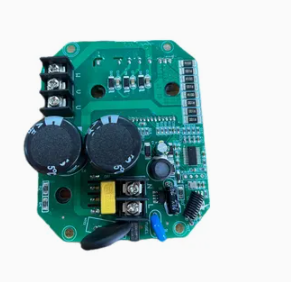
Industrial Fan Controller PCBA
View technical and OEM project information.
Evaluate industrial fan controller PCBA for ventilation and negative-pressure equipment by duty cycle, thermal behavior, protection, and production testing.
For ventilation and negative-pressure equipment, begin with the installed motor and continuous-duty conditions. The controller is evaluated as part of the complete fan system.
Open the product catalog with this category pre-selected to compare the complete matching range.
Industrial fan controller PCBA for ventilation, negative-pressure, and air-moving OEM equipment.
A controller is selected against the complete application, not from a generic rating alone. Confirm the points below before finalising a prototype brief.
Bring Sankey engineers in early with your motor data, functions, target market, and volume plan.
Industrial fan controller selection starts with the installed equipment, not a generic board. Document motor and supply data, airflow or pressure load, continuous-duty profile, ambient conditions, speed command, fault behavior, enclosure constraints, target market, and production test requirements. These inputs give OEM purchasing and engineering teams a shared basis for comparing controller options and planning validation.
Record operating hours, start-stop frequency, speed range, load changes, ambient temperature, airflow around the controller, and allowable temperature rise at the real installation.
Specify the local or external speed command, reverse behavior, feedback, fault reporting, locked-rotor, over-current, over-voltage, and thermal-protection expectations.
Confirm electrical performance, continuous-duty operation, protection response, acoustic behavior where relevant, functional tests, endurance, and production acceptance criteria before release.